
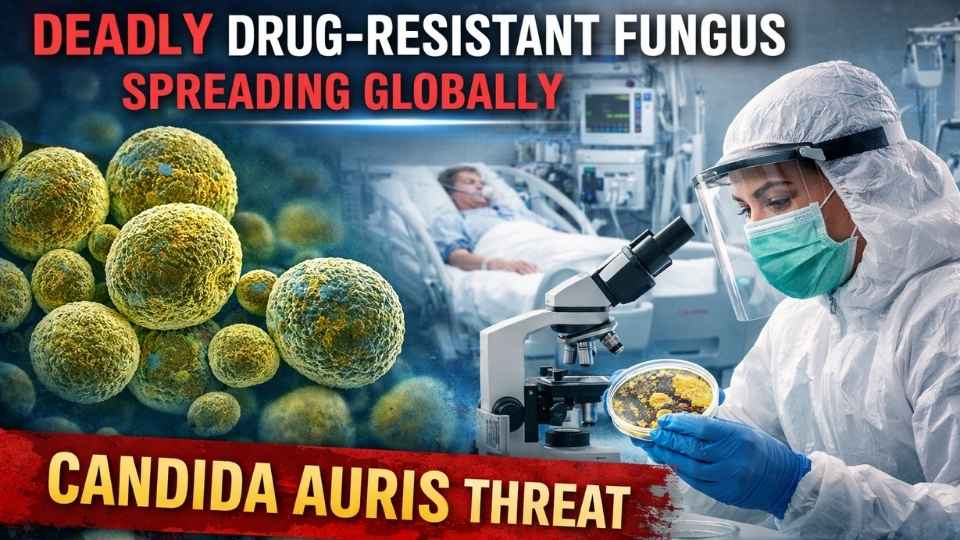
A dangerous drug-resistant fungus Candida auris is increasingly worrying doctors, microbiologists, and medical diagnostics professionals worldwide. Recent findings from an Indian research study, supported by international health reports, suggest that this fungal pathogen is not only spreading rapidly across continents but is also becoming more infectious and harder to control.
Unlike many fungal infections that remain localized or respond well to treatment, Candida auris has shown a unique ability to adapt to hospital environments, resist multiple antifungal drugs, and cause severe invasive infections. For diagnostic centres and hospitals, this trend represents a growing challenge that demands faster detection, stronger infection-control measures, and heightened clinical awareness.
Table of Contents
From Rare Discovery to Worldwide Spread
Candida auris was first identified in 2009, and for several years it was considered an unusual clinical finding. However, over the last decade, reported cases have increased sharply across Asia, Europe, the Americas, and Africa. What is particularly concerning is that these cases are not isolated; many are linked to hospital outbreaks, especially in intensive care units.
The Indian study highlights that genetically distinct strains of Candida auris have emerged almost simultaneously in different regions of the world. This suggests that the fungus is evolving rapidly and adapting to new environments, rather than spreading from a single source. As international travel and healthcare-associated exposures increase, the risk of further global dissemination continues to rise.
Related Article: Alzheimer’s Reversal in Mice: Scientists Restore Memory in Breakthrough Study
Why Candida auris Is More Dangerous Than Other Fungi
Most people associate fungal infections with relatively mild conditions, but drug-resistant fungus Candida auris behaves very differently. It has a strong ability to colonize human skin, allowing it to spread silently from patient to patient. Unlike many fungi, it can survive for weeks on hospital surfaces, medical equipment, and bedding, making routine cleaning measures less effective.
Another major concern is diagnostic difficulty. Standard laboratory techniques may misidentify Candida auris as other yeast species. This delay in correct identification can lead to inappropriate treatment, prolonged infection, and increased risk of transmission within healthcare facilities. For diagnostic laboratories, accurate fungal identification has therefore become a critical frontline defence.
Rising Drug Resistance and Limited Treatment Options
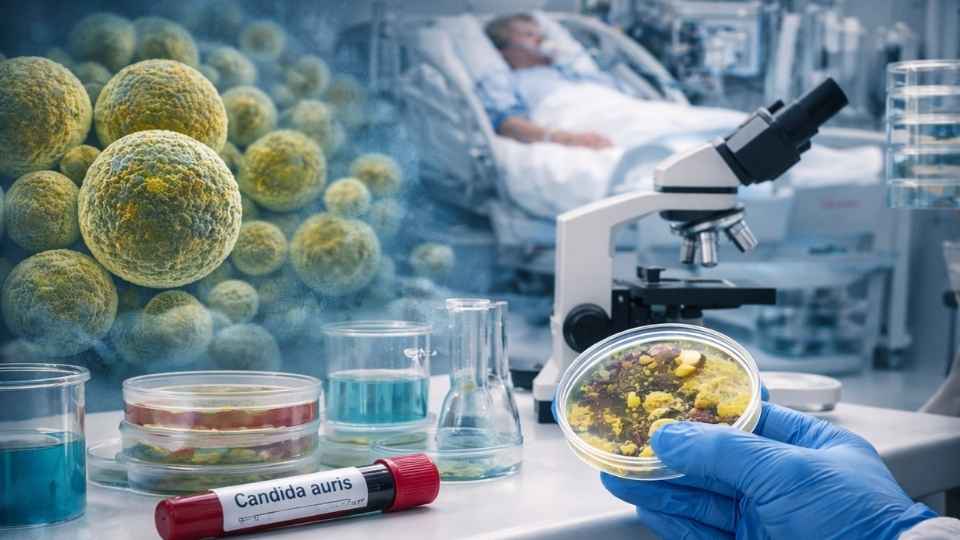
One of the most alarming findings from recent studies is the increasing resistance of Candida auris to commonly used antifungal medications. Many strains show resistance to fluconazole, which is often the first-line antifungal drug. Some isolates are resistant to multiple antifungal classes, leaving clinicians with very limited treatment options.
In severe cases, invasive infections caused by Candida auris can enter the bloodstream, leading to sepsis and organ failure. Mortality rates in such infections are significantly high, particularly among patients who are already critically ill. The Indian study suggests that the fungus is not only surviving drug pressure but may also be becoming more virulent over time.
Related: LungVax vaccine: World’s first lung cancer prevention Trial gets £2.06M funding
Who Is Most at Risk?
While healthy individuals are generally not affected, Candida auris poses a serious threat to vulnerable populations. Hospitalized patients, especially those in ICUs, individuals with weakened immune systems, people with long-term catheter use, and patients on broad-spectrum antibiotics are at the highest risk.
Outbreaks are often detected in settings where patients are closely monitored, such as intensive care units, neonatal units, and long-term care facilities. Once established in such environments, the fungus can be extremely difficult to eliminate without strict infection-control measures.
You can read: Male Infertility Crisis: How Pesticides in Food Are Affecting Sperm Health
Challenges for Medical Diagnostics
For medical diagnostics centres, the rise of drug-resistant fungus Candida auris presents both technical and operational challenges. Rapid and accurate identification requires advanced laboratory techniques and trained personnel. Delays or misidentification not only affect patient outcomes but also increase the risk of hospital-wide transmission.
Diagnostic laboratories now play a key role in surveillance, helping clinicians recognize outbreaks early and implement control strategies. Regular communication between laboratories, clinicians, and infection-control teams has become essential in managing this emerging threat.
Important Info: Why “Stroke in Young Adults” Is Rising — Symptoms, Risks & Prevention
Implications for Infection Control
Healthcare facilities worldwide are being urged to strengthen infection-control practices in response to the spread of Candida auris. This includes strict hand hygiene, thorough environmental cleaning with appropriate disinfectants, and isolation of infected or colonized patients.
The ability of the fungus to persist on surfaces means that standard cleaning protocols may need to be reviewed and upgraded. Hospitals that have successfully controlled outbreaks often rely on close coordination between diagnostics, nursing staff, and infection-control specialists.
Story of A Bold Doctor: Dr Sivaranjani Santosh and ORS Ban: A Landmark Victory Against Fake ORS Drinks
Why This Matters Now
Fungal infections have traditionally received less attention than bacterial or viral diseases, but the emergence of Candida auris is changing that perception. The combination of drug resistance, diagnostic difficulty, and high mortality makes it a significant public-health concern.
For diagnostics providers, this is a critical moment to invest in better detection methods and staff training. For healthcare systems, it highlights the importance of preparedness, surveillance, and rapid response to emerging pathogens.
You can read: How So Many People Got Infected by Brain-Eating Amoeba in Kerala
Looking Ahead
The growing threat of drug-resistant fungus Candida auris underscores the need for continued research, improved diagnostics, and global collaboration. As the fungus continues to evolve, early detection and strong infection-control measures remain the most effective tools to limit its impact.
Medical diagnostics centres, clinicians, and public-health authorities must work together to ensure that this silent but deadly pathogen does not gain further ground. In an era where antimicrobial resistance is already a major challenge, Candida auris serves as a stark reminder that fungal pathogens can be just as dangerous—and just as urgent.
Related References: CDC, NIH-National Library of Medicine, Medical Press, Clivland Clinic