
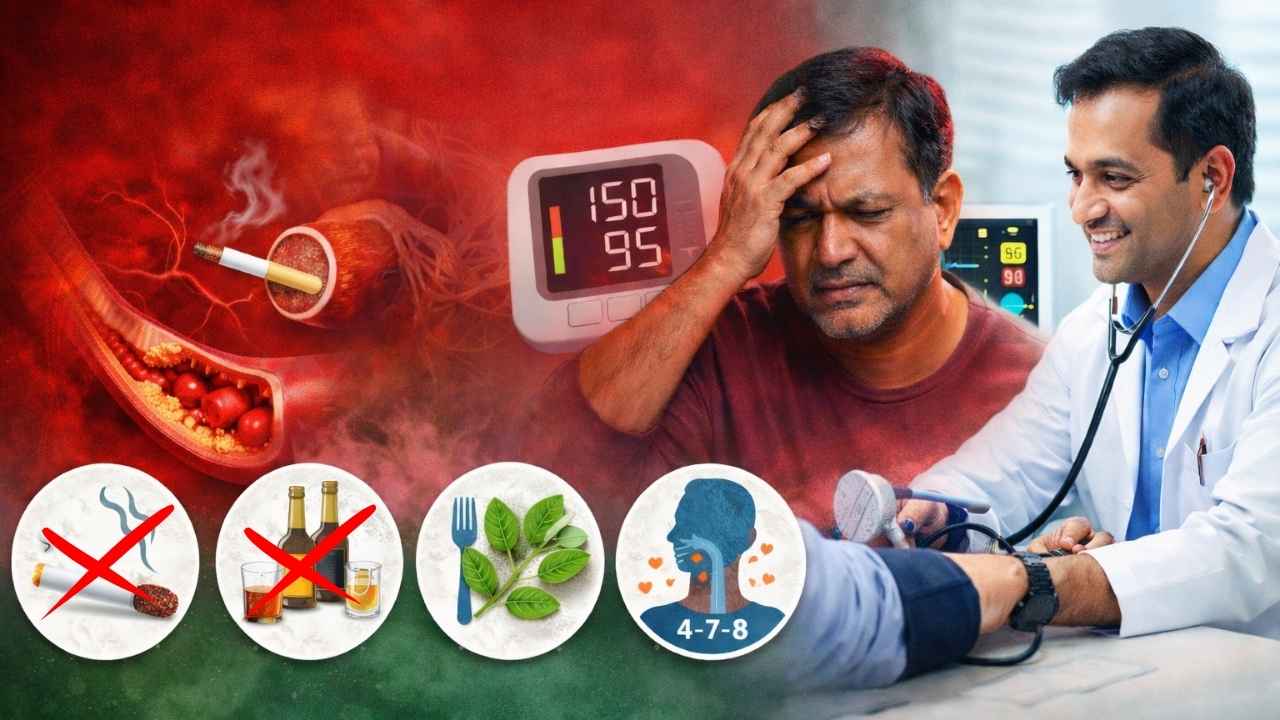
High blood pressure, medically known as hypertension, affects millions of people worldwide — often without clear symptoms. That’s why it’s often called the “Silent Killer.” Many people don’t feel anything until it’s too late, when serious health problems such as heart attack or stroke occur.
In India, changes in lifestyle, stress, unhealthy diets, smoking, and alcohol consumption — including foreign liquor — have contributed to rising rates of hypertension. Let’s break down everything you need to know: symptoms, causes, natural ways to manage blood pressure, the effects of smoking and alcohol, and how controlled breathing exercises can help.
Table of Contents
What Is Blood Pressure?
Your heart pumps blood through a network of arteries and veins. The force of blood pushing against arterial walls is called blood pressure.
It’s measured in two numbers:
- Systolic pressure: Pressure when the heart contracts (top number)
- Diastolic pressure: Pressure when the heart relaxes (bottom number)
A reading around 120/80 mmHg is considered normal. Persistent readings at or above 140/90 mmHg indicate hypertension.
Must read: Top Cancer Drugs in India 2026 — Cost, Availability & What Patients Must Understand
Common Symptoms (But Often None)
High blood pressure often has no clear symptoms, which makes it dangerous. Some people might experience:
- Headaches
- Dizziness
- Blurred vision
- Fatigue
- Nosebleeds
- Palpitations
However, many people remain symptom-free yet still suffer internal damage.
Key Causes of Hypertension
1. Unhealthy Diet
A diet high in salt, processed foods, and saturated fats increases BP.
Natural diets rich in fruits, vegetables, and whole grains help balance blood pressure.
2. Stress
Chronic stress causes your body to release hormones that raise blood pressure.
3. Obesity
Excess weight makes the heart work harder, raising blood pressure.
4. Genetic Factors
A family history of hypertension increases your risk.
5. Lack of Exercise
Physical inactivity is strongly associated with higher blood pressure.
6. Smoking
Every cigarette causes a temporary spike in blood pressure. Longer-term smoking damages blood vessel walls, causing arteries to narrow and stiffen.
7. Alcohol / Foreign Liquor
Frequent drinking — especially strong foreign liquor — can significantly raise blood pressure, and heavy use may reduce the effectiveness of BP medications.
Related: Why Preconception Health Matters?
How Smoking & Alcohol Harm Your Blood Pressure
🚬 Smoking Effects
- Causes temporary and long-term blood pressure increase
- Promotes plaque build-up inside arteries (atherosclerosis)
- Reduces oxygen in your blood
- Increases heart attack and stroke risk
Quitting smoking reduces blood pressure and improves heart health — and the earlier you quit, the greater the benefit.
🍷 Alcohol Effects
Moderate drinking might not be harmful, but high or chronic consumption — especially of hard foreign liquor — can elevate blood pressure and compromise cardiovascular health. Reducing alcohol intake to recommended limits (e.g., 1 drink/day for women, 2 for men) helps control BP.
Natural Remedies to Help Lower Blood Pressure
High blood pressure doesn’t always require medication. Lifestyle approaches and natural remedies can make a real difference:
🌿 1. Balanced Diet
Follow a diet rich in fruits, vegetables, whole grains, lean proteins and low-fat dairy — like the DASH diet — to manage blood pressure.
🥦 2. Potassium-Rich Foods
Potassium helps lessen the effect of sodium. Foods like bananas, spinach, beetroot, oranges, and tomatoes can help reduce BP.
🧘♀️ 3. Deep Breathing & Breath Work
Deliberate slow and deep breathing exercises can lower blood pressure by activating the relaxation response of the nervous system.
- Slow, deep breathing (6–10 breaths/minute) helps calm the nervous system.
- When you inhale deeply and exhale slowly, your parasympathetic system (rest & digest) gets activated, releasing “feel good” endorphins and lowering stress hormones.
- Techniques like 4-7-8 breathing, box breathing, and diaphragmatic (belly) breathing are widely recommended.
Scientific research shows that regular breathing exercises can significantly lower both systolic and diastolic blood pressure.
🍵 4. Regular Physical Activity
30 minutes of walking or moderate exercise daily can help lower BP and strengthen the heart.
🍵 5. Herbal Teas
Herbal teas such as hibiscus, chamomile or green tea may support heart health.
🛌 6. Better Sleep
Poor sleep can increase stress and raise blood pressure. Aim for 7–8 hours per night.
🚭 7. Quit Smoking & Limit Alcohol
Stopping smoking and limiting alcohol are two of the most impactful steps you can take.
Also read: Male Infertility Crisis: How Pesticides in Food Are Affecting Sperm Health
What the Science Says: Deep Breathing & BP
Harvard Health Publishing states that slow, deliberate breathing for just 15 minutes a day can help lower blood pressure — sometimes by up to 10 points on the systolic reading — by stimulating the vagus nerve and calming the nervous system.
Some methods include:
- 4-7-8 Breathing: Inhale for 4, hold for 7, exhale for 8
- Box Breathing: Inhale, hold, exhale, hold — each for equal counts
- Belly Breathing: Deep breathing that uses the diaphragm for full inhalation and exhalation
These exercises help shift your body into a calming mode, reducing stress, heart rate, and blood pressure.
You may read: Nipah Virus Returns to West Bengal: Symptoms, Death Rate & Safety Measures Explained
Symptoms That Require Immediate Attention
Seek emergency care if you experience:
- Severe chest pain
- Shortness of breath
- Sudden confusion
- Weakness on one side of the body
- Severe headache or vision loss
These can be signs of heart attack or stroke.
Also read: Drug-Resistant Fungus Candida auris Spreading Worldwide
How High Blood Pressure Is Diagnosed
It starts with measuring your BP. If readings are consistently high, your doctor may recommend:
- Blood tests (sugar levels, cholesterol)
- ECG
- ECHO
- Kidney function tests
- Urine analysis
Early detection allows for better control and fewer complications.
You may find interesting: Alzheimer’s Reversal in Mice: Scientists Restore Memory in A Breakthrough Study
Hypertension Evaluation at Dhanwantari Diagnostics
At Dhanwantari Diagnostics, serving Diamond Harbour, Kakdwip, and Amtala, we provide a full range of tests to evaluate hypertension:
✔ Complete blood investigations
✔ ECG
✔ ECHO
✔ Kidney function tests
✔ Diabetes & lipid screening
✔ Specialist consultations
With modern equipment and experienced professionals, regular check-ups help catch silent conditions like high blood pressure before they lead to serious problems.
You can read: Why “Stroke in Young Adults” Is Rising in India — Symptoms, Risks & Prevention
Final Thoughts
High blood pressure is not something to fear — but it’s definitely something to monitor and manage proactively. You don’t need symptoms to have hypertension — and waiting until you feel sick can be too late.
Healthy lifestyle changes, breathing techniques, diet modification, regular exercise, quitting smoking, and reducing alcohol — along with medical support — can help you control your blood pressure naturally and effectively.