
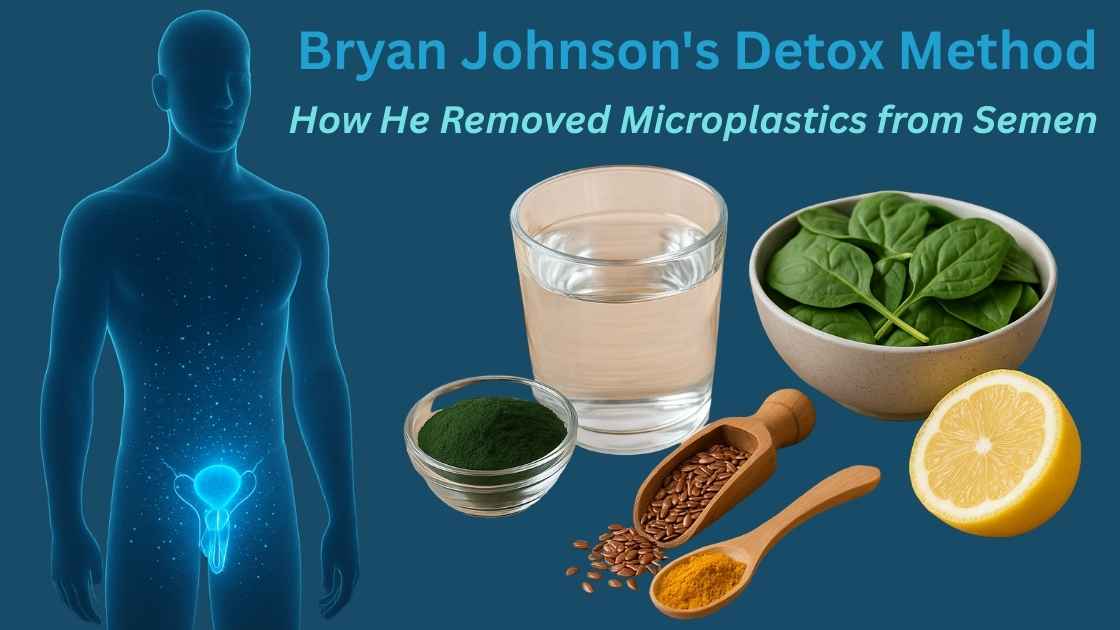
Microplastics have quietly invaded every aspect of modern life — our food, water, and even our bloodstream. But when American biohacker and longevity enthusiast Bryan Johnson revealed that he had removed 85% of microplastics from his semen, it caught global attention. His latest health experiment not only sheds light on how deeply microplastics affect human health but also opens up a discussion about how we can remove microplastics from semen as well as the whole body naturally.
Johnson’s method blends advanced science, disciplined diet, and natural detoxification principles — something that’s inspiring health experts worldwide.
Table of Contents
Who is Bryan Johnson?
Bryan Johnson is a Silicon Valley entrepreneur and founder of Kernel (a neurotechnology company) and Blueprint, his personal anti-aging project.
Known for spending over $2 million per year on his longevity routine, Johnson tracks every aspect of his biology — from blood tests to sleep cycles — to slow down or reverse aging.
He believes the human body can function at its youthful peak through extreme discipline, scientific optimization, and continuous detoxification.
In his latest update, Johnson shocked the wellness world by claiming that he had reduced 85% of the microplastics from his semen, emphasizing that plastic pollution might already be impacting fertility and cellular health globally.
What Are Microplastics and How They End Up in Semen
Microplastics are plastic fragments typically under 5 mm in size, often much smaller (even nano-sized). They result from breakdown of larger plastics (bottles, packaging, microbeads) or are manufactured as small particles. These particles can enter the body via ingestion (food, water), inhalation (airborne dust) or dermal contact (plastics in contact with skin, especially when heated).
Once inside the body, microplastics may circulate in blood, deposit in tissues including organs, and now evidence shows they can be found in semen. In Johnson’s case his semen microplastic load reportedly dropped from ~165 particles per millilitre to ~20 per ml — an ~85% decline over eight months.
Scientists are still working out exactly how microplastics affect fertility and reproductive health, but possible mechanisms include oxidative stress, inflammation, hormone disruption and interference with sperm production.
Possible Health Implications of Microplastics in Human Semen
When we talk about microplastics in human semen, we are dealing with a potential marker of reproductive risk and broader toxin-load. Some of the implications to consider:
- Reduced sperm quality: Some smaller studies suggest higher microplastic exposure correlates with lower sperm motility, lower count and poorer morphology.
- Hormone disruption: Microplastics may carry or leach endocrine-disrupting chemicals (like phthalates, BPA) that interfere with testosterone or other reproductive hormones.
- Oxidative stress & inflammation: Microplastics inside the body may generate reactive oxygen species (ROS) and damage cells, including those in the testis and seminal tract.
- Reflecting overall toxin-burden: Semen may serve as a “window” into your internal exposure — so microplastics in semen could hint at greater exposure elsewhere (blood, organs).
- Long-term fertility and health risks: While causality is not established, the presence of microplastics in semen invites precaution, especially for men hoping to become fathers, or men concerned about reproductive longevity.
It’s important to underscore: research is emerging, not definitive. But the presence of microplastics in human semen is a strong signal to consider lifestyle and exposure control.
How You Can Test and Monitor Your Microplastic Load
1. Semen analysis
Start with conventional reproductive health tests: sperm count, motility, morphology. If you find reduced parameters without obvious cause (infection, varicocele, heavy smoking) then environmental toxins like microplastics may be worth considering.
2. Hormonal profiling
Check testosterone, LH, FSH, prolactin — to assess reproductive endocrine function. If hormone levels are off and exposure to plastics is high, this may suggest a link.
3. Blood/urine microplastic biomarkers
Some private labs (or biohacker initiatives) are measuring microplastics in blood or urine. For instance, Bryan Johnson’s company offered a microplastic blood test. Note: these tests are still novel, not widely validated.
4. Semen microplastics assay
Advanced research labs may use Raman spectroscopy or similar techniques to detect microplastics in semen fluid. Very few clinical labs offer this yet, but it may become more available in future.
Bryan Johnson’s Detox Approach
Bryan Johnson didn’t rely on surgery or synthetic detox products. Instead, his Blueprint Protocol combined natural and scientific strategies:
1. Targeted Detox Diet
He followed an organic, plant-based, antioxidant-rich diet aimed at flushing out toxins through liver and kidney detoxification.
Key foods included:
- Cruciferous vegetables (broccoli, kale, cabbage)
- Berries and green tea for antioxidants
- Garlic and turmeric for anti-inflammatory effects
- Seaweed and chlorella for heavy metal and toxin binding
2. Strict Lifestyle and Monitoring
Johnson tracks over 100 biomarkers daily — including toxin load and hormone balance — to assess progress.
He avoids ultra-processed foods, plastic-packaged water, and uses glass or stainless steel containers only.
3. Advanced Detox Therapies
His team experimented with infrared saunas, deep sweat therapy, and hyperbaric oxygen — all aimed to enhance metabolism and toxin elimination through natural processes.
How to Remove Microplastics from semen & body Naturally
Even if you don’t have Bryan Johnson’s million-dollar setup, you can follow practical natural detox methods to minimize your microplastic exposure and help your body eliminate existing toxins.
1. Eat Detoxifying Foods
Certain foods naturally bind and flush out plastic particles:
- Spirulina & Chlorella: Bind microplastics and heavy metals
- Leafy greens: Support liver detox
- Lemon & ginger: Enhance digestion and toxin release
- Flaxseed & chia: Improve bowel movement, removing particles
2. Drink Filtered Water
Avoid bottled water — one of the biggest microplastic sources.
Use high-quality carbon filters or reverse osmosis systems for home drinking water.
3. Manage Stress and Sleep
Chronic stress increases inflammation, slowing down detox.
Mindful practices like yoga, pranayama, and meditation support the body’s natural purification systems.
4. Ditch Plastic in Daily Life
- Use glass jars instead of plastic containers.
- Say no to microwaving in plastic bowls.
- Carry a metal water bottle instead of a plastic one.
5. Regular Exercise and Sauna
Sweating is a natural way to eliminate toxins.
Engage in 30 minutes of daily exercise and try infrared sauna sessions to flush microplastics through perspiration.
Naturopathy and natural remedies for reproductive health
If your tests reveal reproductive signalling issues (low sperm count/motility or hormonal imbalance) and you suspect higher exposure to plastics/pollutants, naturopathic strategies can support mainstream care. These are complementary and not substitutes for medical treatment.
1. Antioxidant-rich diet
Oxidative stress is one of the key mechanisms by which microplastics may harm sperm. Increase intake of:
- Fresh fruits (berries, citrus) and vegetables (leafy green, broccoli)
- Nuts and seeds (walnuts, flaxseed) rich in omega-3 fatty acids
- Dark-chocolate (in moderation) for flavonoids
- Herbs such as turmeric (curcumin) and ginger for anti-inflammatory support
2. Herbal therapies
- Ashwagandha (Withania somnifera): Evidence for improving sperm count, motility and reducing stress.
- Shilajit: A source of fulvic acid and minerals used in Ayurvedic tradition for male reproductive health.
- Tribulus terrestris: Traditional herb for enhancing libido and sperm quality (requires professional guidance).
3. Lifestyle and mind-body
- Regular moderate exercise (30-45 minutes/day) improves circulation, hormone balance and helps detoxification.
- Yoga and pranayama (breathing exercise) reduce stress, improve hormonal axis and support reproductive health.
- Saunas or sweat-inducing activity may help eliminate toxins — some biohackers attribute reductions in plastic-burden to sauna use (though evidence is still preliminary).
- Avoid overheating the groin region (tight clothing, excessive heat) — optimal testicular temperature is important for sperm health.
4. Supplemental nutrients
Under supervision, consider:
- Zinc, selenium — key for sperm production
- Vitamin D and omega-3 fish oil — support hormonal / reproductive health
- CoQ10, L-carnitine — linked in studies to improved sperm motility
5. Detoxification support
- Increase hydration and natural fibres (vegetables, whole grains) for improving elimination.
- Gentle sauna or steam sessions (with adequate hydration and cooling) may enhance detoxification; again, this remains experimental for microplastics.
- Avoid using plastic cookware or utensils; reduce exposure to endocrine-disrupting chemicals (BPA, phthalates) which often accompany microplastic pollution.
By combining these naturopathic practices with regular medical monitoring (via a diagnostics centre like Dhanwantari Diagnostics), you support the foundation of reproductive health while reducing the burden of microplastics and related exposures.
What We Can Learn from Bryan Johnson’s Experiment
While not a peer-reviewed clinical trial, Bryan Johnson’s claim offers several useful insights about microplastics in human semen:
- He achieved an 85% reduction in semen microplastics in eight months through strong lifestyle intervention — sauna 20 minutes/day at ~93 °C, groin ice pack after sauna, avoidance of plastic food packaging, reverse osmosis water filtration. The Times of India
- His corresponding blood microplastic levels reportedly dropped similarly, suggesting semen load may reflect systemic exposure.
- The key takeaway: rigorous plastic-exposure avoidance plus supporting body detox may yield measurable changes in microplastic burden.
- Caveats: This is a single-individual claim, not yet widely validated. Heat interventions must be carefully managed to avoid harming sperm. Scientists caution against assuming causality until more data is available. The Times of India
Thus, while the concept of reducing microplastics in human semen is not yet mainstream, his experiment underscores the value of proactive lifestyle changes.
Action Plan: What You Should Do Today
- Audit your plastic exposure this week. Note how many times you use plastic containers, bottles, microwave plastics, packaged foods.
- Switch two major items: e.g., glass/stainless bottle + eliminate one single-use plastic item.
- Book a semen and hormone test if you’re in your 20s-40s and thinking about fertility or seeing unexplained changes in sexual/ reproductive health.
- Adopt a “detox” phase for 30 days: Increase vegetables/fruits, drink +2 litres water daily, add a 20-minute brisk walk, practice 10 minutes of mindfulness.
- Monitor for change: After 3-6 months, repeat the semen/hormone tests and note lifestyle changes and results.
- Stay educated: Keep up with emerging research on microplastics in human semen and reproductive health; the field is evolving quickly.
Conclusion
The discovery of microplastics in human semen is a wake-up call for reproductive health and environmental exposure. While the full impact on fertility and long-term health remains under investigation, the evidence is strong enough to warrant preventive action. By reducing exposure to plastics, supporting detoxification, and monitoring your reproductive health parameters, you can take control rather than be passive. Keep in mind that semen reflects broader body health – so what you do to reduce microplastics in human semen also benefits your overall wellness.
Stay proactive, stay informed, and let your lifestyle be your shield against unseen plastic-pollution threats.